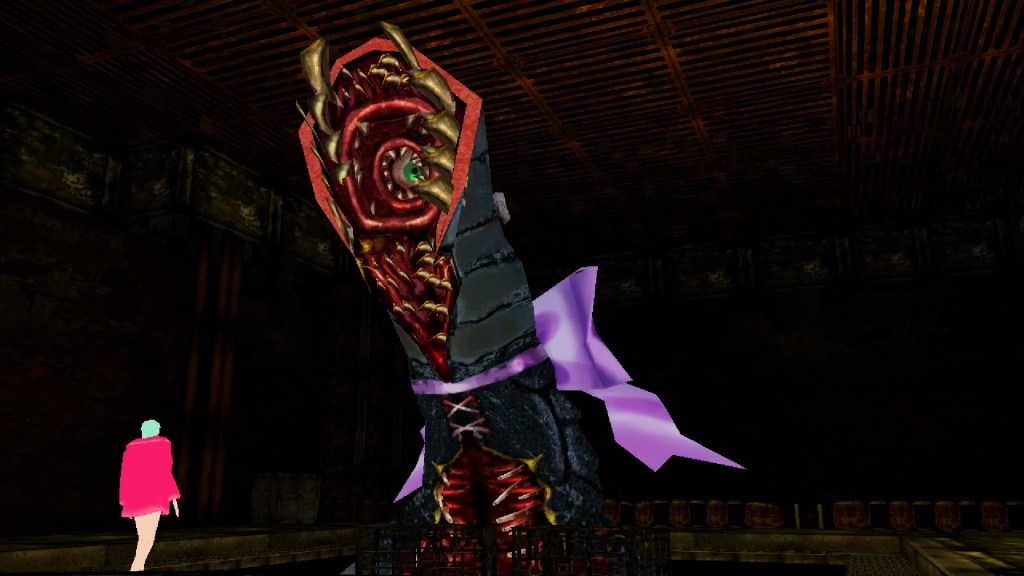
It’s always fun to see a good game get a strong second wind. I had the pleasure of watching this happen to the queer survival horror game Sorry We’re Closed. I finished the narrative-driven indie back in December 2024 on PC, and have been psyched to see people admire the game’s memorable characters, brutal conversations on love and its costs, and heart-blasting action for the console release in March.
In addition to all these merits, one of the things that stuck with me is the soundtrack. Much of it is ethereal and almost haunting, capturing the feeling of walking around an unfamiliar town with more than one secret down its alleys. However, the boss battle rap music is what I revisit most.
Rap in video games isn’t new. Hip-hop and gaming have overlapped in a variety of ways: from 1990s one-off games like ToeJam & Earl, to the iconic Def Jam series, to Fortnite performances headlined by the likes of Eminem and Travis Scott. But, as of late, it still hasn’t shown up in many genres past sports games, GTA entries, and Persona 3, much less survival horror. It’s this scarcity that made hearing rap music in Sorry We’re Closed, from a boss’ perspective no less, a nice surprise.

I had the opportunity to interview the hip-hop group behind these songs, Okumura. Brothers Master and Elder Maikis have made music for games before, notably No More Heroes III and Paradise Killer, and have a separate discography full of game references, like their Balatro-inspired track Risk It All. But, this was the first time they tackled boss battle music. We talked about how they got into making rap for games, their approach to creating Sorry We’re Closed‘s boss fight songs, which game genres they’d like to see use rap more, and rapper 50 Cent’s games.
You can find the full interview on YouTube. Here’s an excerpt from that interview (edited for clarity and concision):
Exalclaw: Each boss battle has a very distinct flavor to it. What got you to that final sound for your songs in the first place, and what made you decide to be so distinct with each one?
Master: Honestly, that was more so [creative director] CB’s mind. We had our inputs, and of course shoutout to Shadowbird the producer at the time. [CB’s] mind was working in a lot of different ways based off the references and inspirations that we had talked about, but the uniqueness and the brilliance of the design of the song’s really came from CB’s mind ultimately.
Exalclaw: Was this your first time working with CB, and did it change your own creative process a lot? Did this feel distinctly different from making previous OSTs for games, or was it similar with its own nuances?
Master: Yes, I would say, and I’m sure Elder can agree with me, this was probably the hardest process that we’ve ever had. But, that’s because we had to challenge our minds in ways that it’d not been challenged before. We had never done boss music before. We had done Itadakimasu [from No More Heroes III], we had done our songs for Paradise Killer, but a whole boss song was a complete perspective shift. We also had to rap as the boss. Not particularly a song about the boss, we took it that next step. We want you to feel like, as you’re fighting this boss, they’re rapping at you in a certain way. Like, this is my story, this is what I’ve been through, this is why you and I are in this battle right now. And that was challenging.
Exalclaw: Another question I actually had in mind with that was when you realized you were writing music for a boss fight specifically, were you ever thinking about how to have a balance so you weren’t overpowering the attention usually demanded of a boss battle? Or were you not even thinking about that, just let’s make a good song that’s gonna grab people’s attention, despite it being a boss battle?
Elder Maikis: That second one is the one, bro, I’m not gonna lie. It was straight up — we just wanted that joint to bang. I wanted people to talk about the lyrics, I wanted people to look the song up. We never made boss music before, I didn’t know how to do it, you know what I’m saying? I just wanted it to hit.
I was thinking about what you said like, usually boss music isn’t lyrically… there’s not lyrics a lot, it’s more about the instruments and the vibes. But we were making sure the lyrics were impacting the experience. It was weird, but at the same time if you know anything about nerdcore music, or just getting the perspective of a character when you’re making a song, the perspective of someone that isn’t you, it wasn’t too hard once we understood what we were doing. It was just trying to grasp what we wanted to do, [that] was the more difficult part.
Master: To quickly piggyback on that, one thing that I personally thought of when approaching this is most times the boss doesn’t get a chance to speak. They don’t get a chance to tell you about their perspective. You learn about it, but they never get a chance to say anything, so when I was thinking about my verses from a lot of the songs, I was thinking okay, if I were the boss in this moment, knowing that I’m going to lose, what would I tell the player? What would I tell the player in my final moments as they’re the one ending me? What would I pass on to that player in this moment? That was a big inspiration for Dream Eater too, just that specific kind of verbiage in my lyrics.


 Exalclaw
Leave a reply to March 30th – Critical Distance Cancel reply