
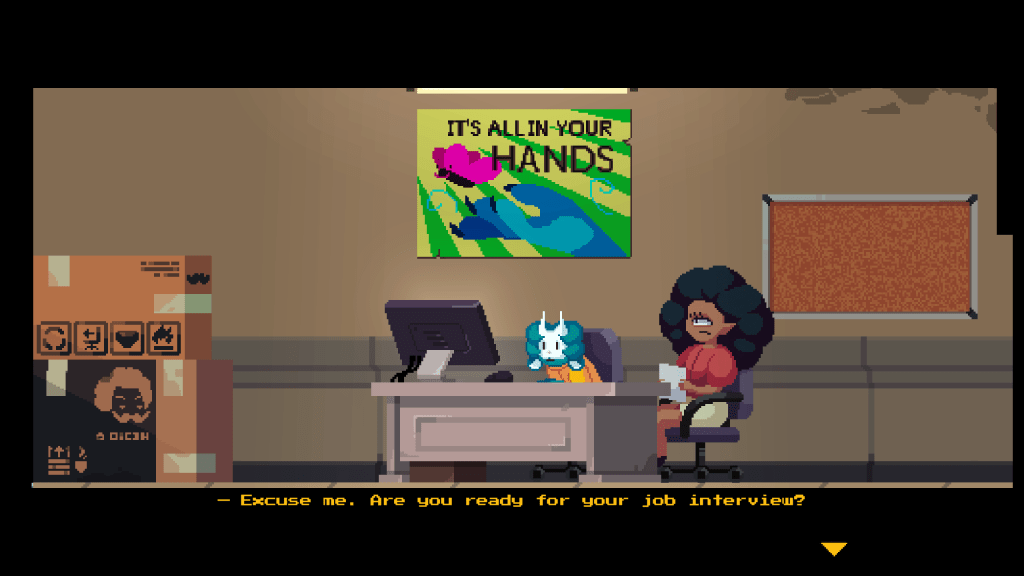
Lately, I’ve been laughing and exhaling through my nose frustratedly at a new game called PEPPERED: an existential platformer. It’s been compared to Undertale for its silly vibes, gag humor, and willingness to laugh at player expectations, but I think that does the game a bit of a disservice. Outside of the fact that PEPPERED involves a lot more jumping and death traps than Toby Fox’s indie hit, as well as giving you one shot at boss fights before continuing the story towards one of its multiple endings, the game is not subtle with its take on how work can kill you.
You play through a world whose inhabitants have known immortality for 100 years, all because their ‘hero’ Theodore Glagolev, who may not be as virtuous as the propaganda implies, defeated the God of Death in a duel. Each year, Theodore puts what’s called a Life Star into a briefcase that keeps the God of Death locked up — except for this year. Theodore is a no-show one hour before mortality becomes reality again, so in the middle of your Coffee boy job interview, your nameless character decides to take matters into their own hands and deliver the star themselves.
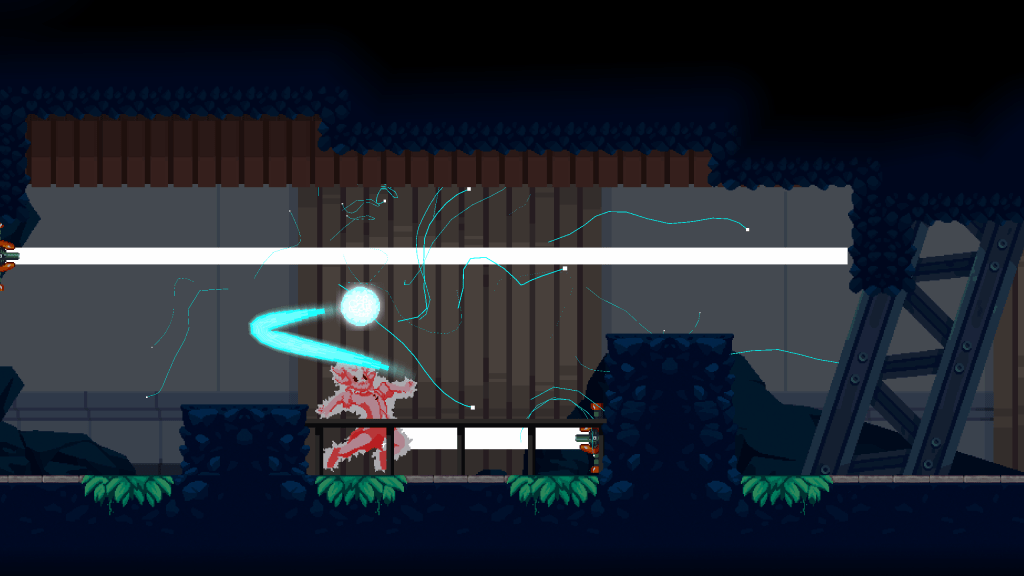
You will dodge traps, make consequential choices, be called a terrorist many times, get chased by a policewoman going through an identity crisis, and die during multiple playthroughs. It’s not a huge time-sink to see the different endings since the game is short (and some endings can even occur in less than 10 minutes). A more conventional save system would’ve been appreciated to explore alternate endings more easily, but it’s not an overly burdensome venture overall.
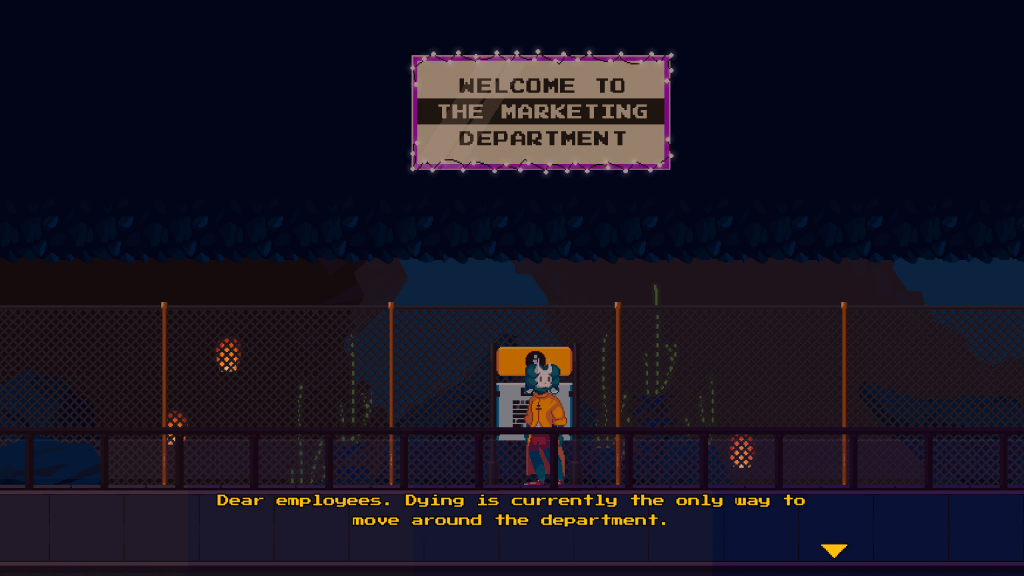
Now, when I say you’ll die, I mean you’ll die a LOT. It’s not just a narrative device or the result of a mistimed jump, but a way to progress through the game. Technically, people do die in PEPPERED, but they immediately come back to life. An entire “checkpoint system” was created in-world so that people wouldn’t keep reviving in random places. For example, employees at the company you interviewed at can only move around the marketing department by dying. To progress, I had to throw myself into a fire. While the more familiar dance of dying and returning to a point emerges as the game continues, and a missed jump never stops being a missed jump, this clever use of its lore to manufacture death-inspired progress adds to the satire in a meaningful way.
It made me reflect on how work and death interact in the real world. I don’t just mean the unfortunately numerous ways people die at work, ranging from unsafe working conditions to overwork to even poor luck, although PEPPERED plays with this more literal interpretation. While I incessantly rejected job offers from immoral individuals, saving the world in this game still feels like work. Citizens, a TV host, and a policewoman frequently ask about your qualifications, undeterred in their questioning of what makes you the right fit for stopping the God of Death. Even in a storyline where you do save immortality, there is an expectation that you now hold the role of Hero, one who is rewarded with a golf course for enduring physical hazards and lethal adventures.
But, this game also made me think about the more abstract death that occurs at a desk. The type where you must hide or shave off parts of yourself throughout the work day so you can get that raise, land that promotion, or simply keep your job. While I do believe certain things shouldn’t be discussed at the workplace unless necessary, like personal health, it’s a shame that many workers don’t discuss their basic realities for fear of making the wrong person uncomfortable.
For example, politics at work can be a minefield, especially considering how malleable that term is and who gets to define it. My primary advice is to seriously interrogate what the goal is if and when someone discusses any hot-button issues on the job. It’s unavoidable for certain professions, but not mandated or even encouraged in most industries. Staying silent can compound harm when injustices occur, but it’d be dismissive to not acknowledge how speaking up can have negative consequences that must be considered. This, atop of misinformation about issues that can spread at formerly Twitter-finger speeds, makes discussing politics at works an unpopular choice. With that said, how long should a conversation be dodged when the government’s actions and words indicate a threat to your trans coworker? Or your immigrant coworker? Or anyone dependent on a stable government that can reliably dispense social services? These discussions, or lack thereof, have a real impact on lives.
This isn’t to say that all work is a trap of self-censorship and quieting oneself. Running a company doesn’t automatically make you an executioner. Being self-employed or the owner of a business can also reduce personal vulnerability. Moreover, many businesses, although often smaller, unionized, and/or explicitly committed to safe, inclusive workspaces, maintain environments where people can show up as their full selves, or at least as much as they are comfortable with the world seeing. Some companies even clearly identify how a policy or action will harm their employees and industry. The observations of death discussed here should not be used as an excuse to not dream of a healthier work ecosystem, or discount ongoing efforts towards that goal.
But, even before several employers started moving differently to meet the current White House’s restructuring of society, the status quo encouraged several marginalized groups to code switch in an interview. To straighten their hair or adopt male power poses. To act more like the people who traditionally end up in the C-Suite. To act ‘normal’ even if it’s contrary to the self. To die a little, or a lot. As PEPPERED lethally beats in with its satirical take on how work and death intersect, if and how you die at work is often determined by who holds your job in their hands.

 Exalclaw
Drop your thoughts!