
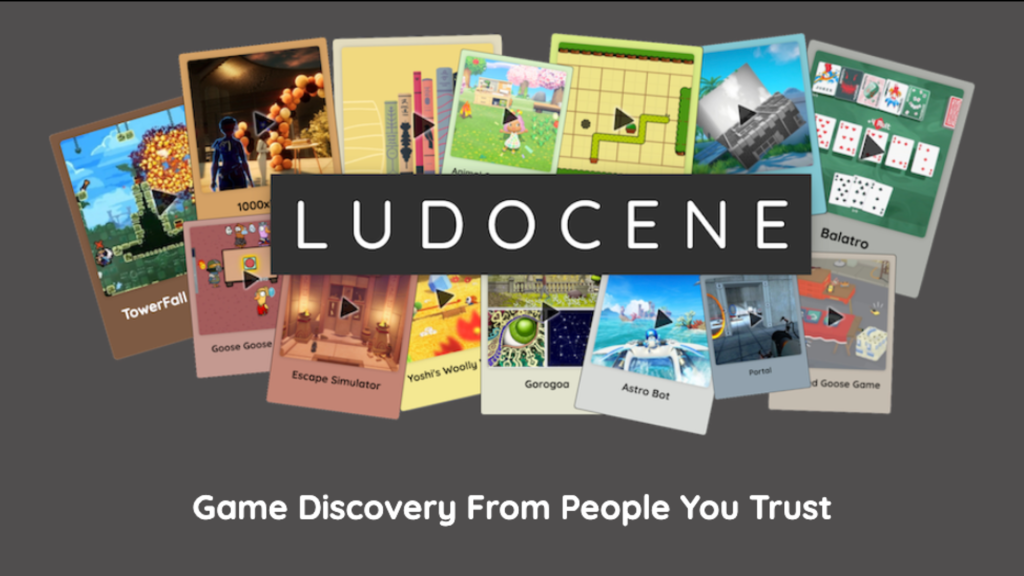
On March 24th, I found the prototype for the game discovery tool Ludocene waiting in my inbox. I had been looking forward to testing it out ever since supporting the successful Kickstarter in its last few weeks of fundraising. Ludocene’s dating app approach to discovery seemed interesting, and its use of industry experts to bolster recommendations was a big draw. Now, I’m happy to say it feels like a worthwhile investment, because watching an expert card ruin my horror run reminded me where the fun of discovery is.
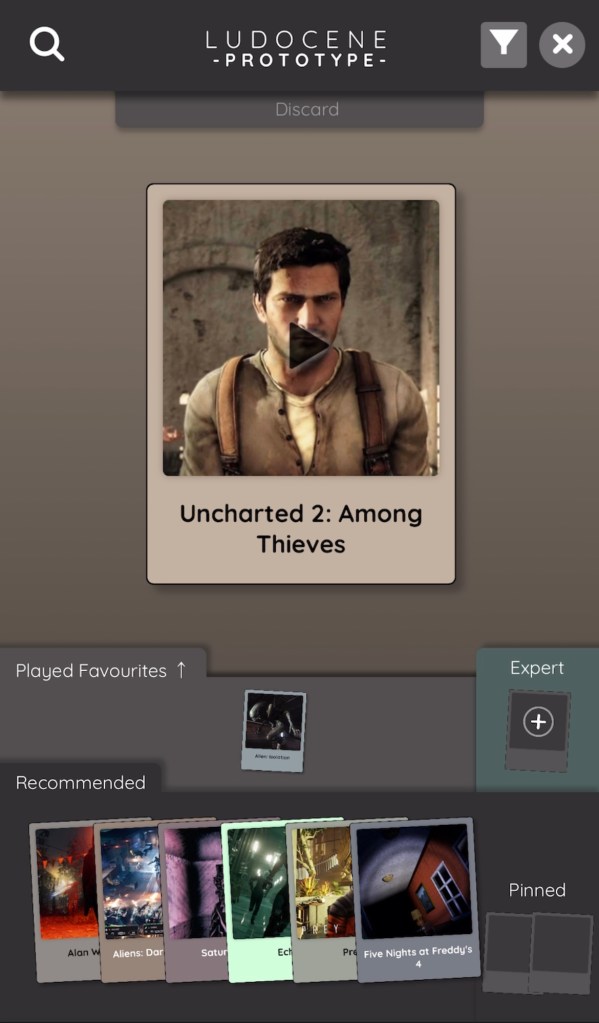
In Ludocene, each game in its library is represented by a card. On the front is a picture linked to a trailer you can watch, while the back features a short synopsis, genre tags, and a ‘Buy now’ button that reveals a breakdown of where the game is available, as well as its pricing. Users will swipe up to discard the game, and swipe down to add it to the ‘Played Favourites’ tray.
The ‘Recommended’ tray will then slowly populate itself with games based on what’s inside ‘Played Favourites.’ You can also add cards to the ‘Pinned’ area so they don’t disappear as the ‘Recommended’ tray updates. This section also influences recommendation, but in a separate way than ‘Played Favourites.’ Lastly, expert cards are available that can influence your recommendations to match the chosen expert’s taste. Experts include but are not limited journalists, podcasters, streamers, and developers.
An especially useful feature of Ludocene is that runs are saved and can be named. This, along with the ease of starting a new run, incentivizes using the tool with a variety of goals in mind. After fiddling around for a while, I decided to start a new run with the intention of finding some horror games I haven’t played.
I find that intentionality immediately makes looking for games less miserable. While finding a horror title to start with required resisting the urge to swipe down on favorites like Fez and Animal Crossing: New Horizons, knowing it was in service of a goal made missing out on potential recommendations more bearable. Plus, I could always start a new run later, knowing this current one will be saved.
Finally, Alien: Isolation came across my screen. While adding it to my ‘Played Favourites’ was technically cheating since I’ve only watched others play it, I figured the game would make a good launchpad from what I knew. After swiping down, my ‘Recommended’ tray immediately populated with five games, including Prey, Alan Wake, and Five Nights At Freddy’s 4. I’ve been meaning to play Prey for a while, and didn’t want to forget that, so I added it to my ‘Pinned’ section once my finger stopped highlighting the entire screen by accident.
After a couple more minutes of swiping, I had a ‘Played Favourites’ featuring pretty big-hitters, including Alan Wake 2, Dead Space, and Lethal Company, which spawned a large array of recommendations such as Bioshock, We Happy Few, The Texas Chainsaw Massacre, Content Warning, and more. I considered ending my run there, but then thought to myself: why not see what an expert would say?
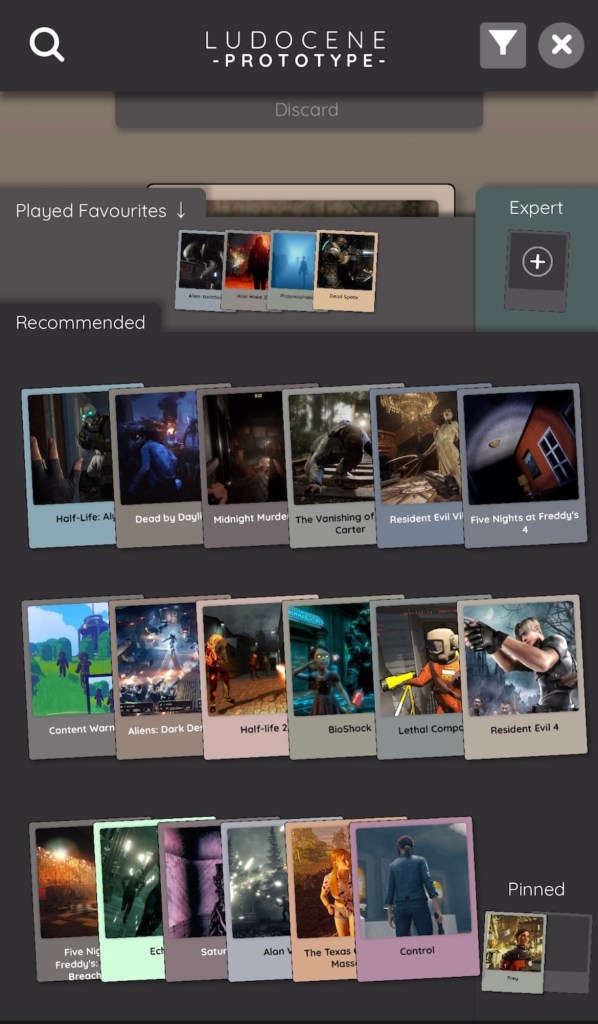
This is how I discovered that, despite Ludocene hosting a wealth of individuals with impressive resumés, many do not bring up horror games. Not no one, but I spent almost six minutes looking for someone to mention horror games on their expert card. This isn’t a bad thing, or even something I would notice usually without a set goal, but I never imagined I’d breathe a sigh of relief from reading the “Horror-Comedy” tag on Jen Simpkins’ card. It’s not exactly straight-up horror like I was searching for, but horror and comedy often go hand-in-hand, so this label was just as enticing. I figured adding the card wouldn’t break my momentum.
What a fool I was. I opened up my ‘Recommended’ tray to see nearly all bits of sinister drained away. A few survived Jen’s influence, but for all intents and purposes many ghosts had been exorcised, the monsters were slain, and the killers disappeared until their next revival. While what was there could fall under suspense, maybe slightly creepy if I’m being generous, horror was not the first descriptor that came to mind for most of this collection.
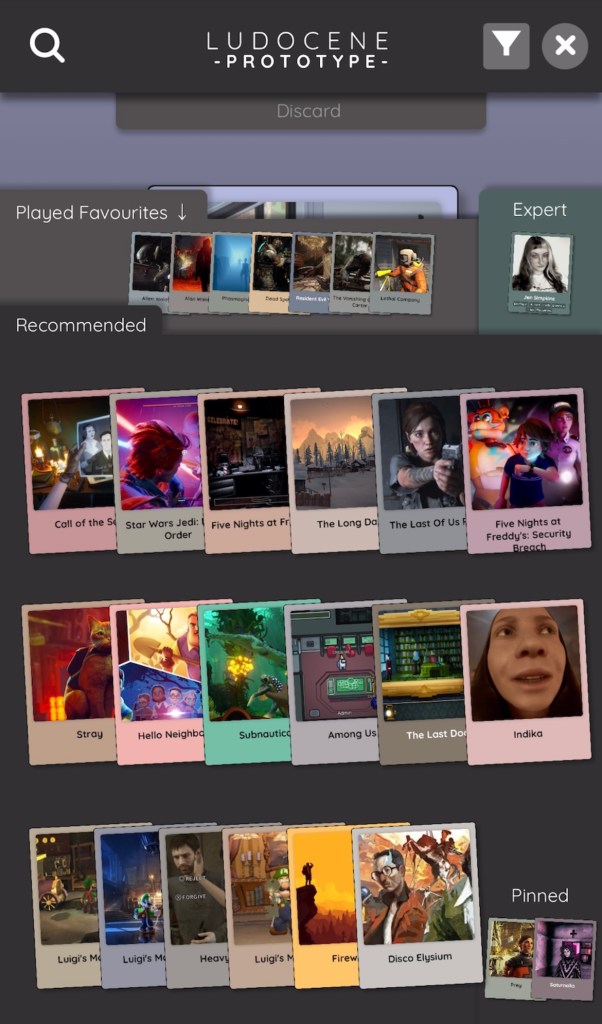
I might have been more upset if Jen’s recommendations hadn’t ruled. It was her card that surfaced Disco Elysium, Firewatch, and Luigi’s Mansion games. It’s the one that put Indika back on my radar, a game I’ve been meaning to check out since every person who has touched it cannot say enough good things. This mishap continued to earn the word ‘happy’ in front of it as I swiped and swiped and swiped to discover a small treasure trove of titles I hadn’t heard of, standing side-by-side with ones I couldn’t recommend more myself. I got so distracted that the original goal simply didn’t matter anymore. You can find what this final run looked like here, but only on mobile. The Ludocene prototype doesn’t work on desktop and tablets, but the full release will.
Ludocene isn’t perfect by any means. Part of that is it’s still a prototype, so I ran into a couple bugs. A card would get selected from my ‘Recommended’ try, but then take a few taps to get back into its resting position when I decided not to do anything with it. The first time I swiped up on an expert card, a new one didn’t appear. I selected cards that I didn’t intend to because my fingers hit the sweet spot between two of them (something I imagine being less of an issue with a mouse). It’d also be nice if the Pinned section could hold more than two cards, but that might just be the greed in me.
Additionally, Ludocene doesn’t solve one of the more existential issues I face with looking for games, which is once I find them, where’s the time to play all this awesome stuff? Especially when there’s more to offer with each passing year? It’s a nice problem to have, especially since most titles will wait for you to come back to them, but a problem nonetheless. While playtime could be an interesting feature to add later on, this tool alone will not solve those kind of issues.
With all that in mind, I still had fun looking for games with Ludocene. It isn’t revolutionary, and I can imagine my pivot annoying others in a different scenario, but I found good suggestions along the way that was completely separate from my intended goal. A simple discovery tool that can deliver the unexpected is one I can get behind.

 Exalclaw
Drop your thoughts!