
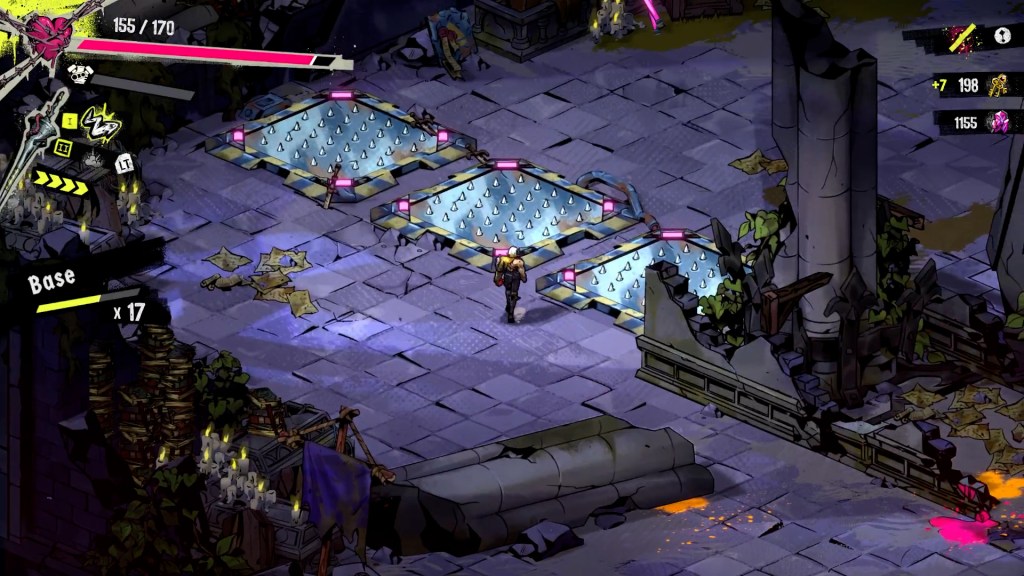
After defeating another round of the Queen of Keys’ frontline in Reignbreaker, I realized I was low on health. This prompted a deep sigh, but not because I considered the run doomed. The reason was my best chance of getting a significant health boost, and an artefact upgrade to make the next fight easier, could be found in a shop room. And in this dystopian rogue-like, getting to those rooms usually means walking over a bunch of spike traps.
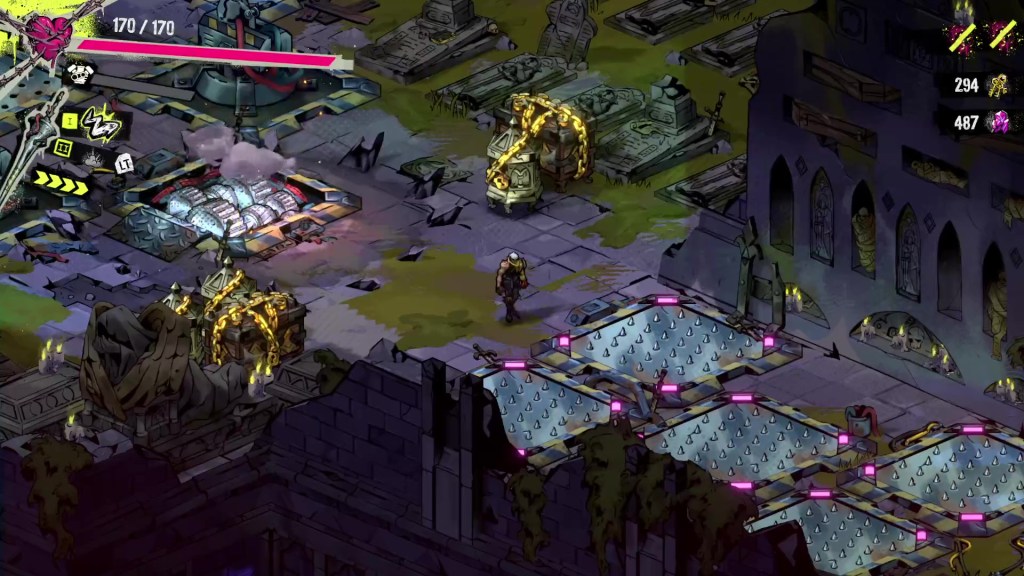
but at what cost?
These spikes have been a good analogy for what it’s like playing Studio Fizbin’s latest (and last) game.
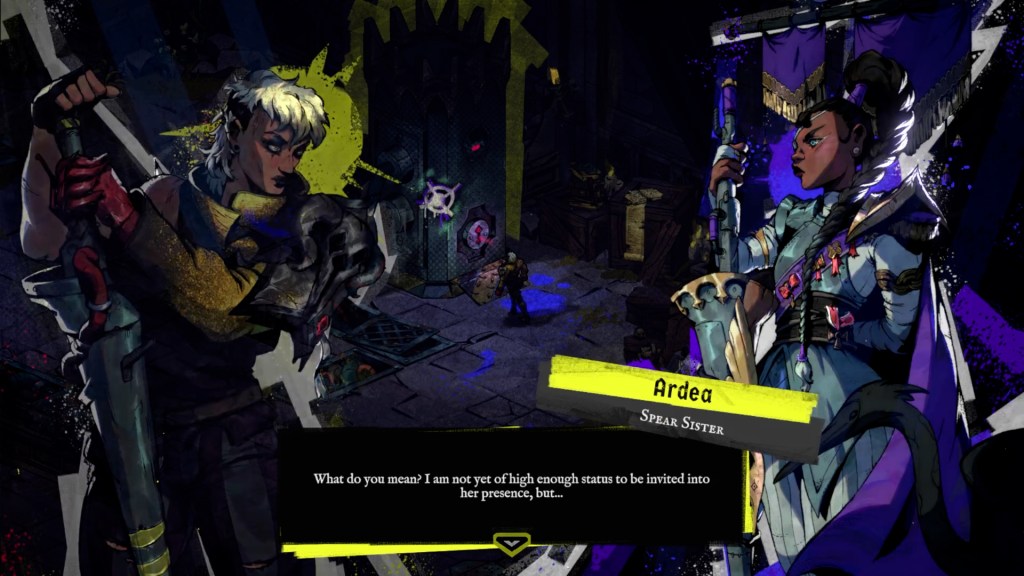
You play as Clef, a former child soldier turned rebel hell-bent on overthrowing the Queen. Using your fists and a versatile, motorized javelin, you will fight, lose, and fight again as you make your way to the throne room for a rowdy audience. To progress, you unlock a certain number of vaults per room through combat encounters, which earns you upgrades and raises the bridge for the next level. In Clef’s path stands stunningly-drawn characters who offer banter but not a fight, and high-tech machines who have a little too much fight. And those damn spikes.
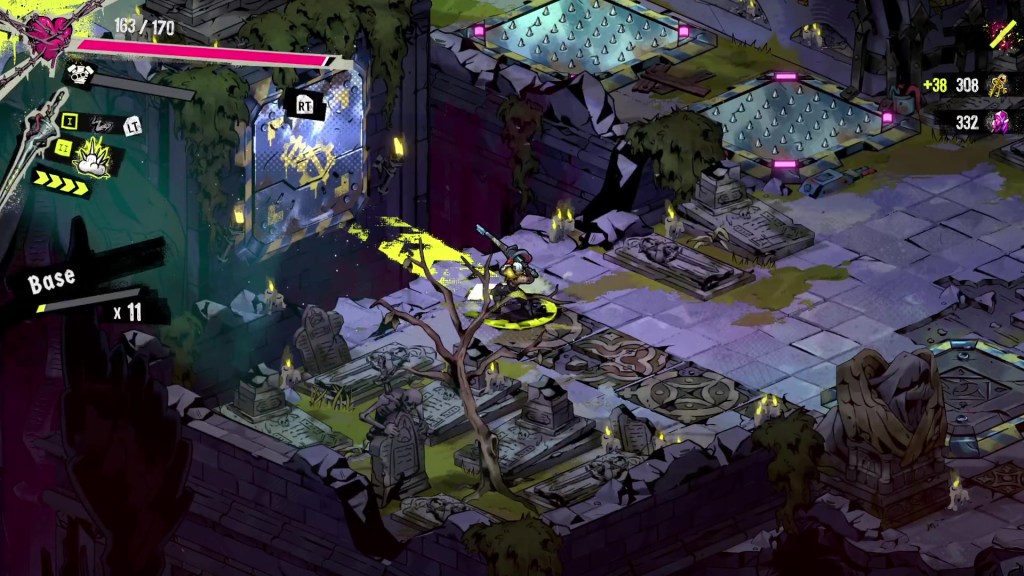
The spikes aren’t all bad. They can pair nicely with the game’s fast-paced combat when you know how to leverage them. In addition to javelins that can be darted at enemies and, depending on which one is equipped, act like a shotgun, detonator, signal for a storm of projectiles, and more, trap awareness becomes integral to getting through levels faster and less painfully. You can punch or lead enemies into spikes and turrets, trigger a volley of rockets or combustible canisters, and even turn the javelin into a trap with a short attack range. Stringing together a series of kills that uses both the javelin and available traps has the dual effect of finishing rooms quicker and feeling fantastic while doing it.
However, traps hurt Clef just as much as enemies, even when you’re just traversing the space between combat encounters and shops. There are temporary status effects you can find that minimize trap damage, but you should dodge them regardless to ensure a run doesn’t end prematurely. The game often (but not always) gives you the chance to deactivate them, yet the caveat is fights take slightly longer without the extra damage dealer.
Traps aren’t abnormal for rogue-likes and the active participation in their use here is rewarding, but the spikes are everywhere! They started shifting from tool to nuisance after I walked into one after letting my guard down post-fight and went to collect my hard-earned spoils. Then, there are the times I lost sight of the floor amid all the visual noise and accidentally dashed onto the trap. Oh, and let me not forget the instances where my spatial perception was slightly off and I dashed onto the spikes’ edge instead of over it as I tried to get more health. That last one’s more of a personal failing, but ends up getting highlighted when the other two happen more than a few times.
These spikes are an extra pinch of friction that undermine momentum a little too frequently, which sums up my feelings about Reignbreaker as a whole. Outside of the built-in floor tacks, while movement is smooth and the amount of playstyles the javelin offers is great, the needed damage for basic enemies starts to drag. Now, this small drudgery can sometimes be mitigated depending on my build and upgrades. Plus, more enemy types appeared over time that ensured I wasn’t smashing the same enemy all the time. These aggressive machines also started to feature effects like invulnerability to the throw mechanic, or becoming electrified so you couldn’t punch them, that added some strategy into the mix.
But more often than not, each raid started a bit slow and took a few minutes before ramping up to what makes Reignbreaker fun to play. And despite the increasing enemy diversity, the pool is still fairly small. Encounters in-between boss fights start to feel same-y if you don’t mix up your javelin playstyle, especially towards the end game. This is exacerbated by the fact that more rooms get added to your run with each level, and the changes to enemies become less impactful. The accompanying difficulty increase is understandable, but after a while I caught myself just wanting to meet the level’s boss already so I could see the next new change. This is a compact game, so luckily this anticipation never turned into aggravation at the whole title.
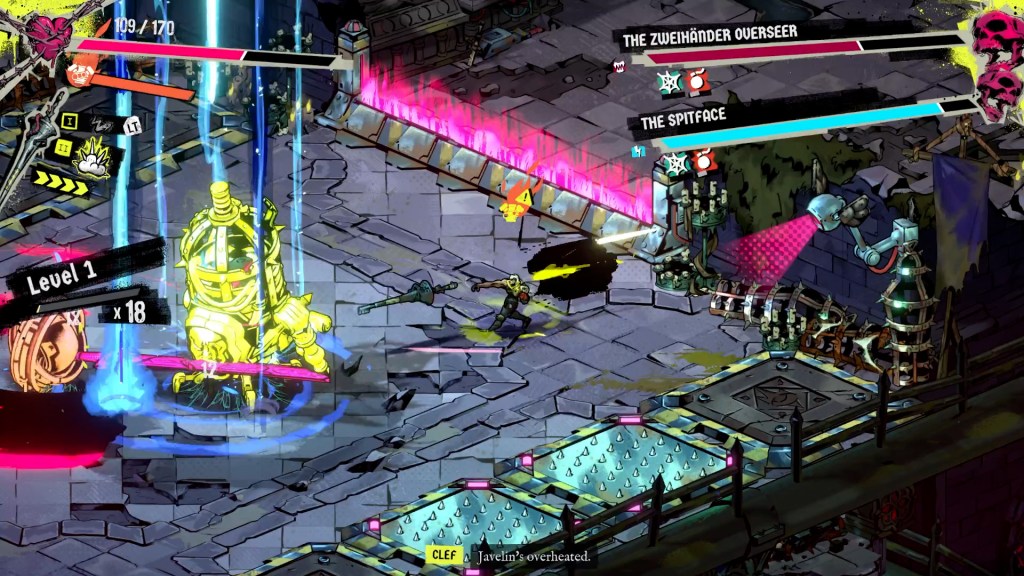
It’s also worth mentioning that you have to fight defeated bosses again in later raids. This got close to being annoying over time, but fortunately boss fights are the best part of this game outside of the artwork and voice acting. While a larger variety of bosses would be appreciated, the few here provide an engaging challenge that’s appropriately difficult. They made me want to slam my controller down in frustration at my failure, but ultimately keep it in my hands to see if a different build would work better. This game felt best when it put traps to the side and allowed me to use the Queen of Keys as target practice.
Overall, Reignbreaker offers a solid combat experience that could be better if what surrounds it was more balanced. Its ideas have strong arms, evident from the kick-ass javelin system and stylish aesthetic vision, that would benefit from an ironing out of certain redundancies. Also, the main menu song from Djerv goes hard.

 Exalclaw
Drop your thoughts!